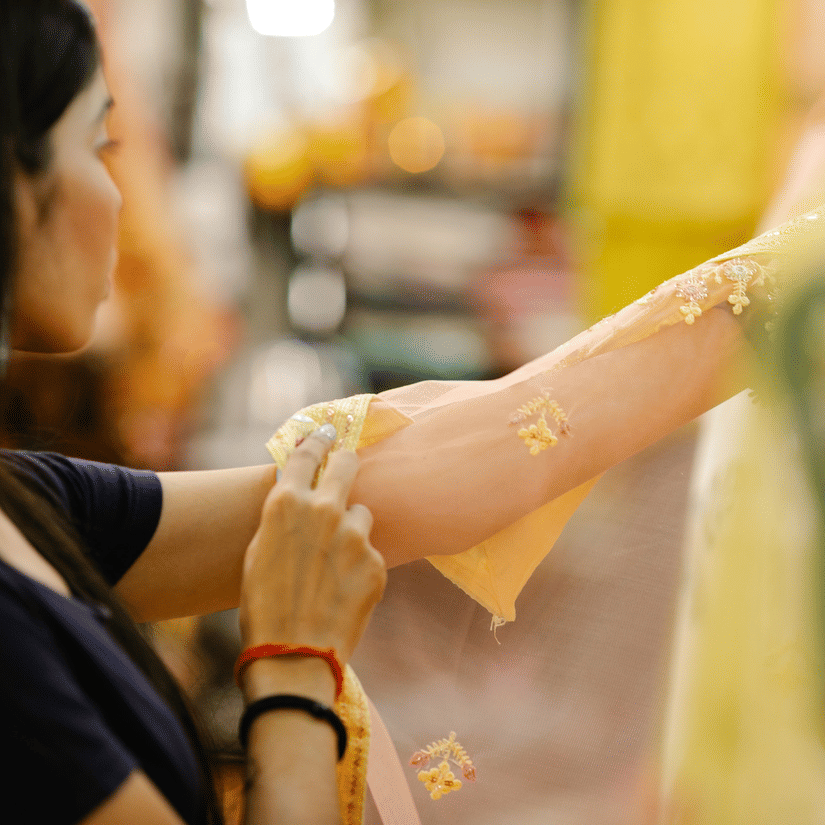
Chikankari is a traditional hand-embroidery craft closely associated with Lucknow, known for delicate threadwork, floral motifs, and finely worked patterns on fabric. Its story has grown alongside the city’s cultural identity, turning a needle-and-thread technique into one of Lucknow’s most recognisable artistic traditions. For travellers, exploring chikankari in Lucknow is as much about understanding the craft as it is about finding a piece worth taking home.
A Craft Shaped by Lucknow
The exact beginnings of chikankari are not completely settled. Government craft sources describe several traditions around its origin, while a widely repeated account links its growth to the Mughal court and to Nur Jahan in the seventeenth century. What is clearer is the craft’s deep connection with Lucknow, where it developed into a highly specialised embroidery tradition and continues to support a large artisan community.
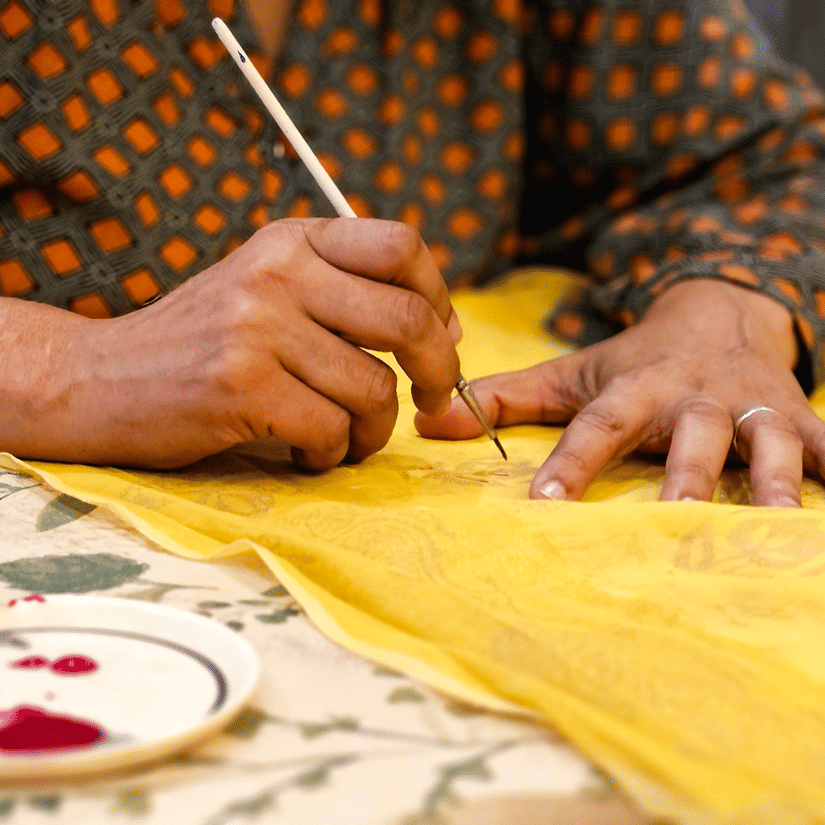
Traditional chikan was associated with white thread on fine white fabric, but the craft now appears on cotton, muslin, silk, georgette, chiffon, linen, and other materials. The making process generally moves from a printed pattern to embroidery, followed by washing and finishing. Lucknow Chikan Craft also has Geographical Indication registration, formally linking the craft with its region of origin.
The Stitches Behind the Pattern
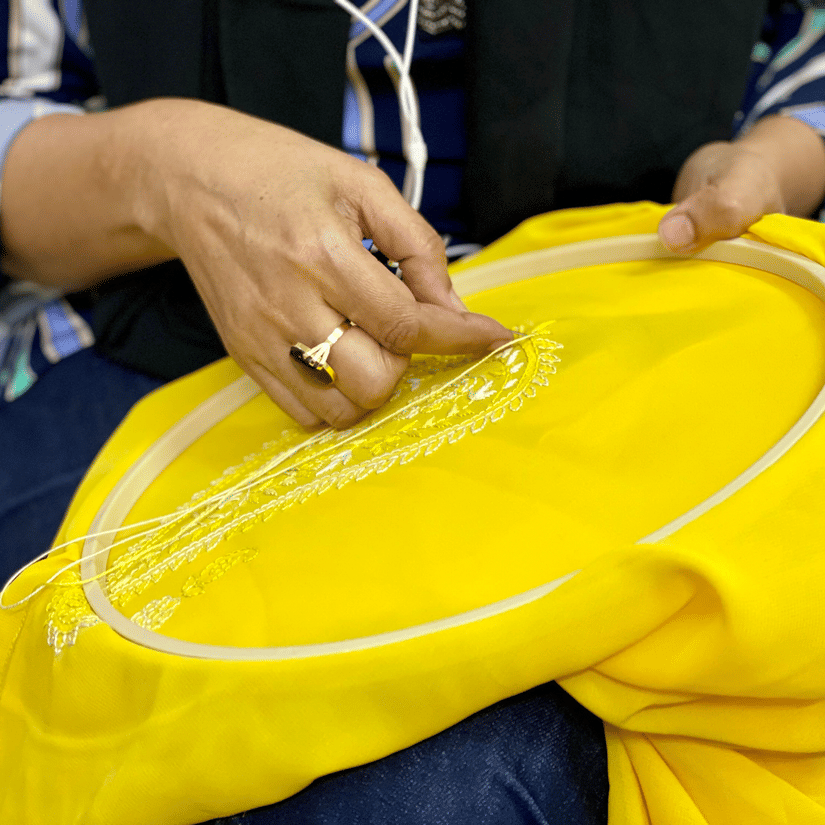
One reason Lucknow chikankari looks so distinctive is the way different stitches create flat, raised, shadowed, and open-work effects. Official craft references name stitches such as bakhia, murri, and phanda among the repertoire. Rather than judging a piece by one stitch alone, look at how the embroidery changes across the fabric and how evenly the motifs have been worked.
| Stitch/Style | What it Does | What to Notice |
|---|---|---|
| Bakhia | Creates a shadow-like embroidered effect | Soft patterning that appears through or across the fabric |
| Murri | Forms small raised, grain-like details | Tiny textured knots or raised centres |
| Phanda | Adds compact raised accents to motifs | Small knotted details often used within floral forms |
| Jaali Work | Creates an open, net-like appearance | Fine spaces formed without cutting away the fabric |
Where to Go for Chikankari Shopping in Lucknow
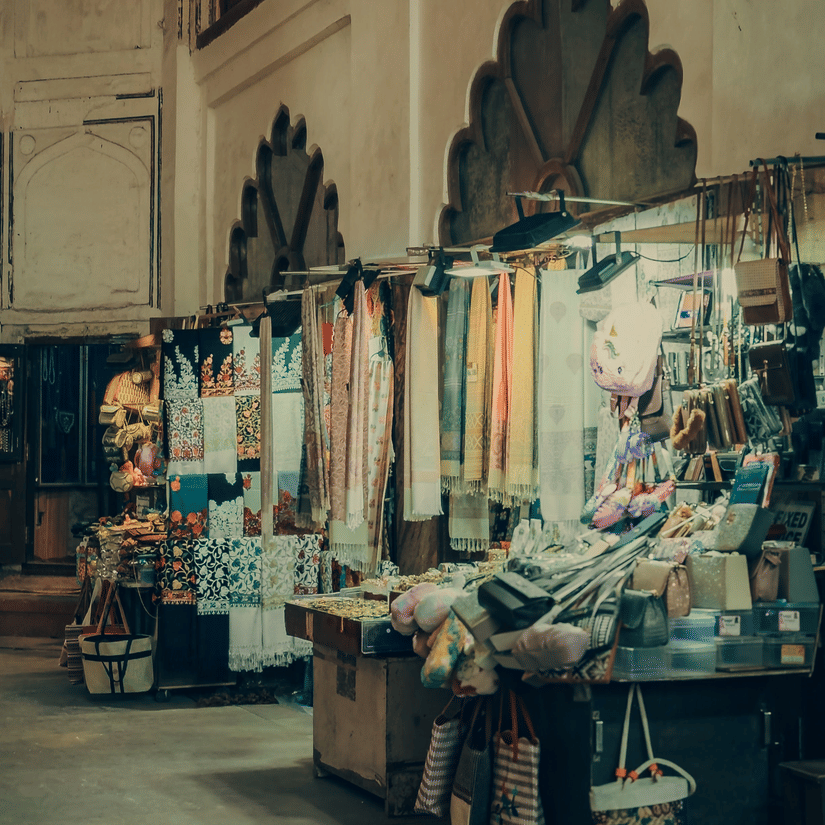
Shopping for chikankari becomes more interesting when you see how different Lucknow markets approach the craft. Hazratganj offers an accessible mix of established shops, showrooms, and traditional shopping, while Aminabad is one of the city’s older markets and is known for chikan sarees, clothing, handicrafts, and everyday finds. Chowk is another traditional market area worth exploring, especially if you want to combine craft shopping with a walk through old Lucknow.
For a broader look at the city’s craft traditions, explore our Handicrafts guide. If Hazratganj is your main stop, our Shopping in Hazratganj guide can help you plan the neighbourhood around your shopping time.
How to Identify Genuine Hand-worked Chikankari
Machine embroidery can imitate the look of chikankari from a distance, so a closer inspection matters. Genuine handwork is not always perfectly identical from one motif to the next. Small variations can be part of the character of hand embroidery, while the reverse of the fabric may also reveal how the stitches have been worked.
- Check the reverse of the fabric for evidence of hand-worked thread movement
- Look for slight, natural variations rather than perfectly repeated machine-like motifs
- Examine dense areas such as floral centres for fine raised work or knotting
- Ask the seller whether the piece is hand embroidered, machine embroidered, or a combination of both
- Compare the fabric, stitch density, finishing, and overall workmanship before judging value
What Should You Expect to Pay?
There is no single reliable price for chikankari. Cost changes with the base fabric, the amount and density of embroidery, the complexity of the stitches, the size of the worked area, additional embellishment, and whether the piece is fully hand embroidered. A light cotton kurta with sparse work will usually sit at a very different price point from a silk, georgette, or heavily worked ensemble.
- Simple Pieces: Lighter fabrics, smaller embroidered areas, and relatively restrained stitch work
- Mid-range Pieces: Denser embroidery, more detailed motifs, better fabric, or a wider spread of handwork
- Premium Pieces: Intricate all-over embroidery, fine fabrics, complex stitch combinations, or added mukaish, sequins, beads, or similar embellishment
When comparing prices, ask what part of the garment is hand-worked and whether embellishments are separate from the chikankari itself, for travellers, that usually gives a clearer sense of value than choosing purely by the lowest price.
Stay Close to the Shopping Trail at Clarks Avadh
Clarks Avadh, Lucknow, is in Hazratganj, placing our hotel in one of the city’s best-known shopping districts and making it a convenient base for a chikankari-focused day in Lucknow. From here, travellers can begin with Hazratganj and then continue towards older shopping areas such as Aminabad and Chowk, depending on how they want to explore the city.
After shopping, returning to a centrally located stay keeps the day simple and leaves room for more of Lucknow’s food, heritage, and cultural experiences. Explore our hotel and plan your stay around the parts of the city you want to discover.

A Piece of Corbett to Take Home
Chikankari is easy to admire for its delicacy, but its real appeal lies in the labour behind each worked motif. Understanding the stitches, knowing where to shop, and learning how to recognise hand embroidery can make chikankari shopping in Lucknow far more rewarding. Choose slowly, look closely, and take home a piece that carries a little of the city’s craft tradition with it. Planning a visit? Start with the Clarks Avadh, Lucknow and book your Lucknow stay directly.
Frequently Asked Questions (FAQs)
What is chikankari?
Chikankari is a traditional embroidery craft closely associated with Lucknow. It uses fine hand stitching to create floral, textured, shadow, and open-work effects on fabrics such as cotton, muslin, silk, georgette, and chiffon.
Is chikankari originally from Lucknow?
Chikankari is strongly identified with Lucknow, and Lucknow Chikan Craft has geographical indication registration. Its precise early origin is debated, although one well-known tradition links its development to Nur Jahan and the Mughal period.
Where can I buy chikankari in Lucknow?
Hazratganj and Aminabad are established shopping areas for chikan clothing and handicrafts. Chowk is also a traditional market district worth including when exploring old Lucknow and its crafts.
How can I tell if chikankari is hand embroidered?
Check the reverse of the fabric, look for slight natural variations in the stitches, examine detailed areas closely, and ask the seller whether the work is fully hand embroidered, machine embroidered, or mixed.
Which chikankari stitches should I know?
Bakhia, murri, phanda, and jaali are among the well-known terms associated with chikankari. Different stitches create shadowed, raised, knotted, or open-work effects.
Why do chikankari prices vary so much?
Prices depend on the fabric, embroidery density, stitch complexity, coverage, finishing, embellishment, and whether the work is done by hand. Heavier or more intricate handwork generally requires more labour.
Is Hazratganj a good area to stay for chikankari shopping?
Yes, Hazratganj is itself a major shopping district, and staying there gives travellers convenient access to shops in the area while keeping other parts of central Lucknow within reach.
Chikankari is a traditional embroidery craft closely associated with Lucknow. It uses fine hand stitching to create floral, textured, shadow, and open-work effects on fabrics such as cotton, muslin, silk, georgette, and chiffon.
Is chikankari originally from Lucknow?
Chikankari is strongly identified with Lucknow, and Lucknow Chikan Craft has geographical indication registration. Its precise early origin is debated, although one well-known tradition links its development to Nur Jahan and the Mughal period.
Where can I buy chikankari in Lucknow?
Hazratganj and Aminabad are established shopping areas for chikan clothing and handicrafts. Chowk is also a traditional market district worth including when exploring old Lucknow and its crafts.
How can I tell if chikankari is hand embroidered?
Check the reverse of the fabric, look for slight natural variations in the stitches, examine detailed areas closely, and ask the seller whether the work is fully hand embroidered, machine embroidered, or mixed.
Which chikankari stitches should I know?
Bakhia, murri, phanda, and jaali are among the well-known terms associated with chikankari. Different stitches create shadowed, raised, knotted, or open-work effects.
Why do chikankari prices vary so much?
Prices depend on the fabric, embroidery density, stitch complexity, coverage, finishing, embellishment, and whether the work is done by hand. Heavier or more intricate handwork generally requires more labour.
Is Hazratganj a good area to stay for chikankari shopping?
Yes, Hazratganj is itself a major shopping district, and staying there gives travellers convenient access to shops in the area while keeping other parts of central Lucknow within reach.