Long before sandstone walls rose on this ridge, the hill belonged to the Meena chieftains of the Susawat clan who governed the region from their own fortified settlements. Their hold ended when Kachhwaha prince Dulha Rai defeated the Meena chiefs and claimed the territory now known as Dhundhar, laying the foundation for Rajput sovereignty in this region.
The Amer Fort history begins in 1592, when Maharaja Man Singh I commissioned the fortress that would anchor Kachhwaha authority for the next 135 years. Jai Singh I expanded the complex in the early mid-1600s, adding the courtyards, audience halls, and residential quarters that still define the fort’s layout.
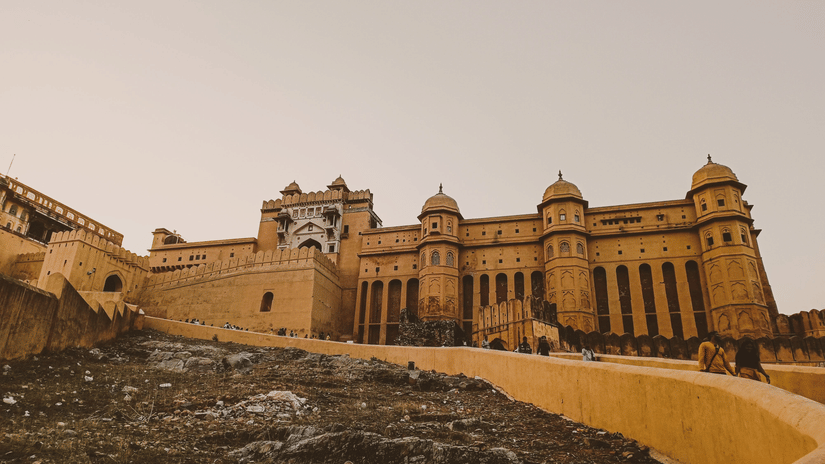
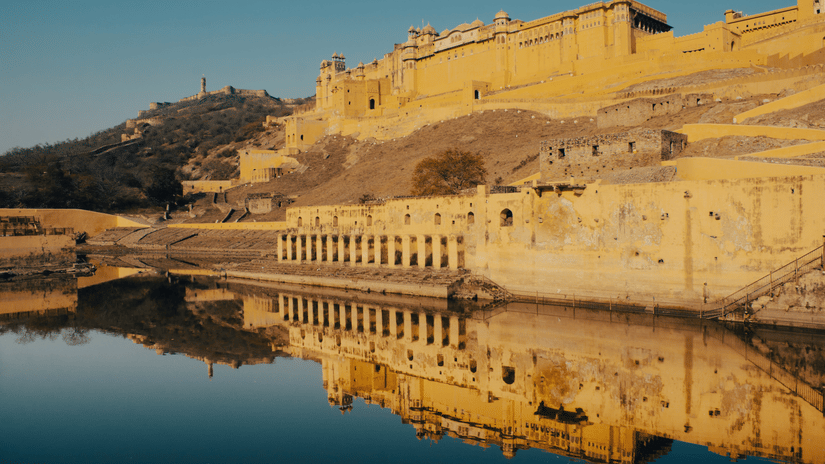
Each successive ruler layered new chambers and ornamental work onto the original structure, blending Rajput ambition with the Mughal aesthetic that the court had absorbed through alliance.
By 1727, Sawai Jai Singh II moved the capital to the new city of Jaipur, and the fort quietly shifted from royal residence to monument. What remains is not a ruin but a living record, where every archway and courtyard still carries the weight of the decisions that were made within.
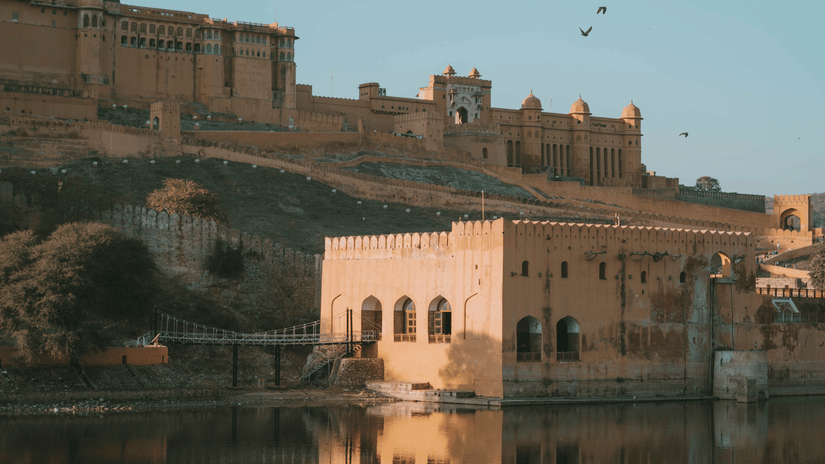
The first impression of Amber Fort, Jaipur, arrives not through the gate but from the road below, where the structure appears to grow directly from the Aravalli ridge it sits upon. Constructed from pale yellow and red sandstone with white marble detailing, the fort is arranged across four main courtyards that ascend the hill in sequence.
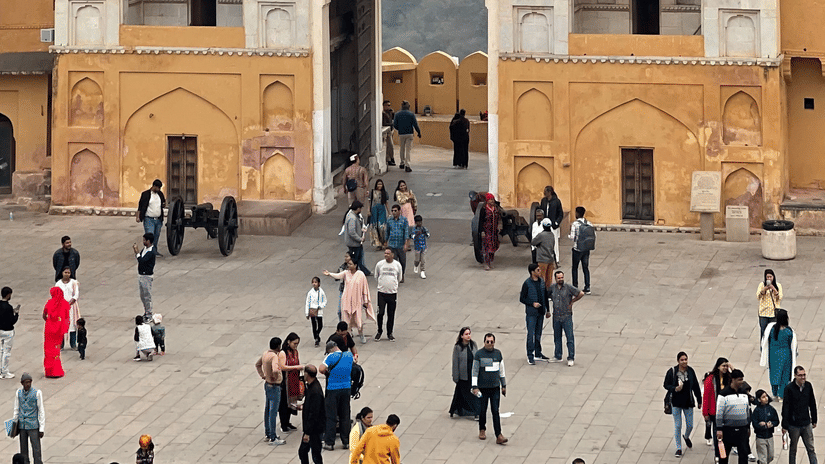
Entry is through the Suraj Pol, the Sun Gate, which faces east to catch the morning light and opens into Jaleb Chowk, where returning armies once displayed their spoils.
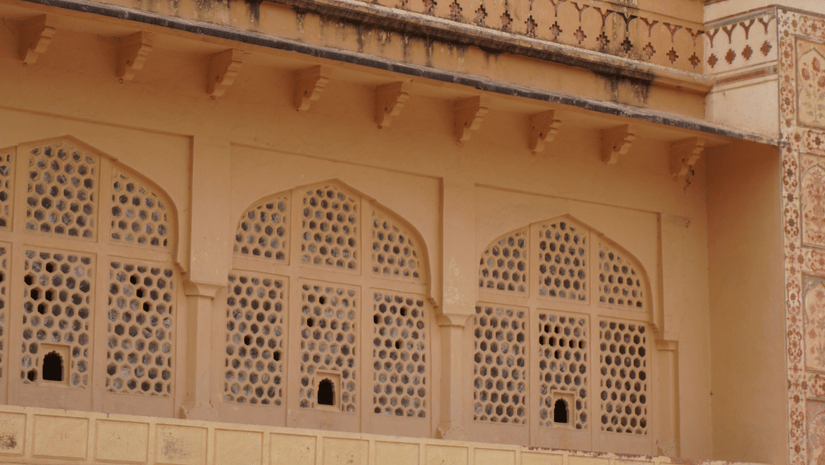
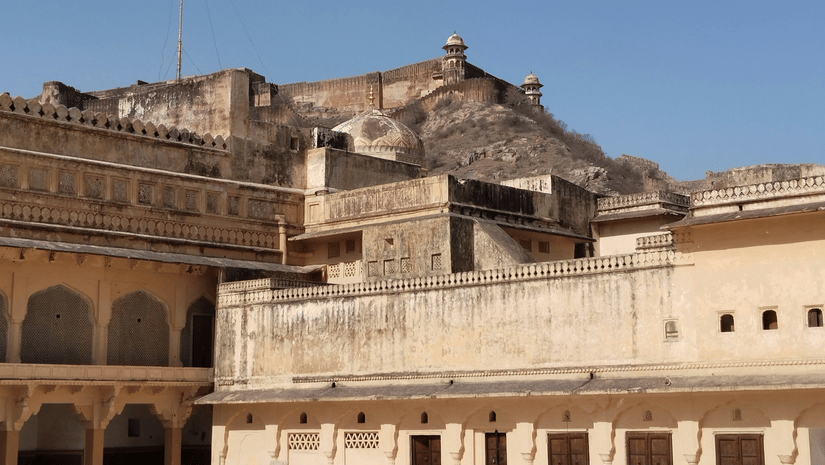
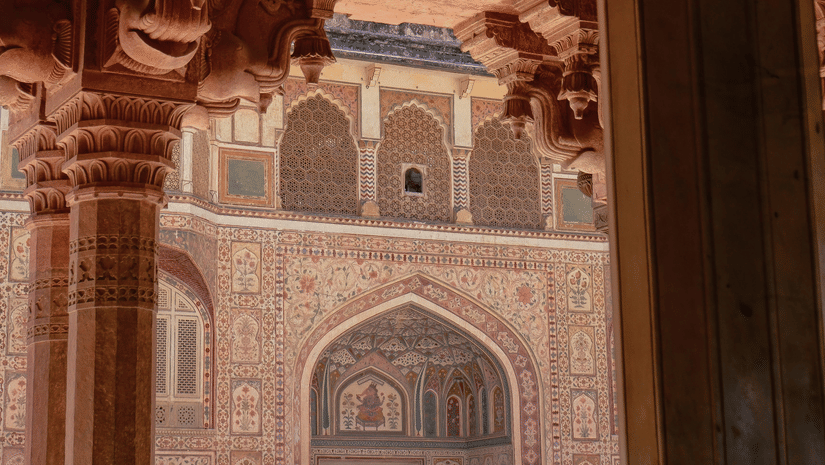
The architectural language here is neither purely Rajput nor purely Mughal. It is a deliberate fusion, shaped by political alliances and shared court aesthetics. Arched colonnades sit alongside carved jharokha balconies, and pietra dura inlay meets geometric jali screens in the same corridor with startling harmony.
Above the fort, Jaigarh Fort stands on the same Aravalli ridge, connected by a subterranean passage that once served as the royal escape route during a siege. Together, the two forts form a single defensive and residential complex that controlled this stretch of Rajasthan for over a century.
If there is one space within Amer Fort, Jaipur, that captures the imagination of every visitor, it is the iconic Sheesh Mahal, the fort's celebrated Mirror Palace. Located on the third level, this extraordinary chamber is among the most photographed and most Instagrammable attractions within the complex.
According to legend, the queen wished to sleep beneath the stars, but royal customs prevented her from resting in the open air. To fulfil her wish, master craftsmen lined the walls and ceilings with thousands of tiny convex mirrors, reportedly imported from Venice.
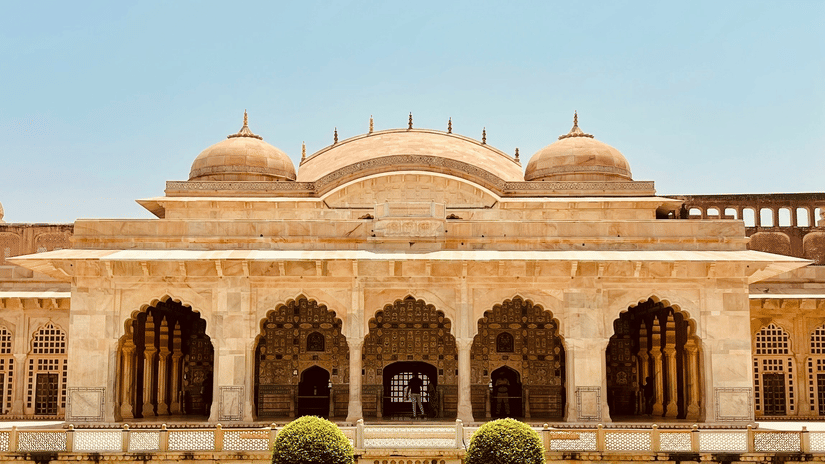
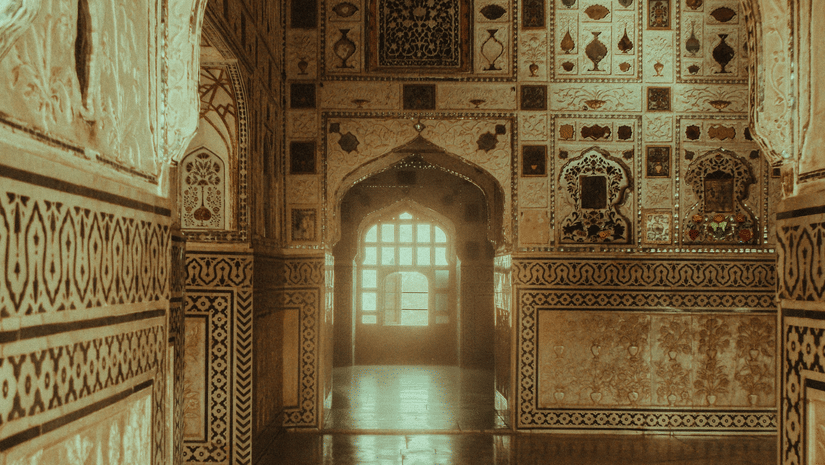
When just two candles were lit within the chamber, their glow reflected endlessly across the mirrors, transforming the room into a glittering canopy of stars. The true brilliance of Sheesh Mahal lies not only in the legend but also in its remarkable craftsmanship. Intricate mirror mosaics are framed by white marble relief work and elegant pietra dura floral inlays, showcasing a seamless blend of Rajput and Mughal artistic traditions.
As light dances across the mirrored surfaces, the chamber shifts between intimacy and grandeur, revealing new details from every angle. It is little surprise that visitors linger here longer than almost anywhere else in Amer Fort, captivated by a space that continues to inspire wonder centuries after it was first conceived.
Beyond the dazzling beauty of the Sheesh Mahal, Amer Fort reveals itself as a carefully planned royal city where every hall, courtyard, and chamber served a distinct purpose. Walking through its corridors offers a fascinating glimpse into the workings of Rajput governance, royal traditions, and everyday life within one of Rajasthan's most powerful kingdoms. Each space tells a different story, from public ceremonies and political discussions to private royal moments hidden from the eyes of the court.
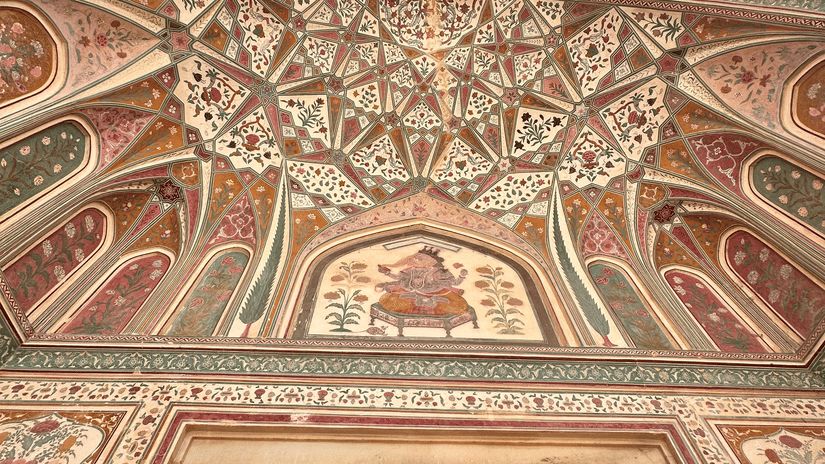
Among the fort's most striking features is the magnificent Ganesh Pol, a three-storey gateway adorned with intricate frescoes commissioned during the reign of Mirza Raja Jai Singh. Above it sits the Suhag Mandir, where the women of the royal household could discreetly observe celebrations unfolding below through beautifully carved marble jali screens.
Nearby, the Diwan-i-Aam, or Hall of Public Audience, served as the setting where rulers met their subjects, resolved disputes, and conducted matters of state. Deeper within the fort lies the more private Diwan-i-Khas, reserved for confidential discussions with trusted advisors and distinguished guests.
Not far away, the Sukh Niwas showcases the ingenuity of Rajput architecture through a cooling water system that channelled fresh air into the living quarters, providing welcome relief from Rajasthan's intense summer heat.Together, these remarkable spaces reveal that Amer Fort was not simply a symbol of royal grandeur, but a thriving seat of power designed with equal measures of beauty, purpose, and innovation.
At a Glance
- Amer Fort Timings: 8:00 AM to 5:30 PM daily, with extended hours until 9:00 PM.
- Amer Fort Entry Fee (Indian Visitors): INR 200 per person.
- Amer Fort Entry Fee (Foreign Visitors): INR 1,000 per person.
- Children Below 7: Free entry.
- Best Arrival Window: Before 9:00 AM or after 3:30 PM to avoid the midday heat and the peak tour group hours.
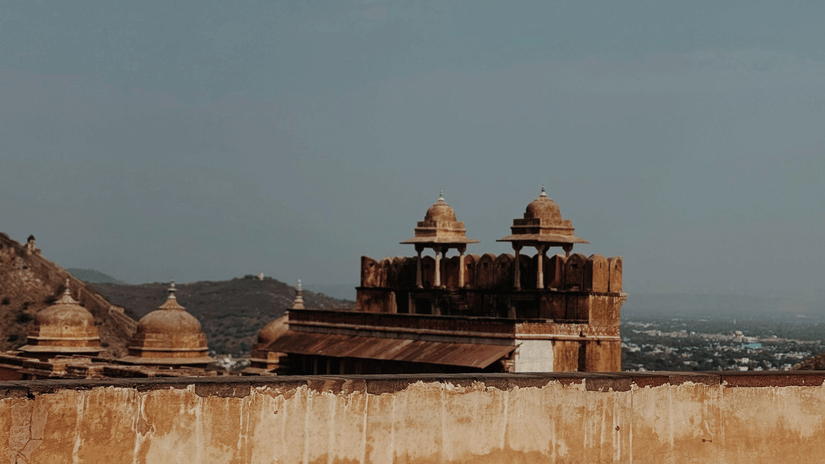
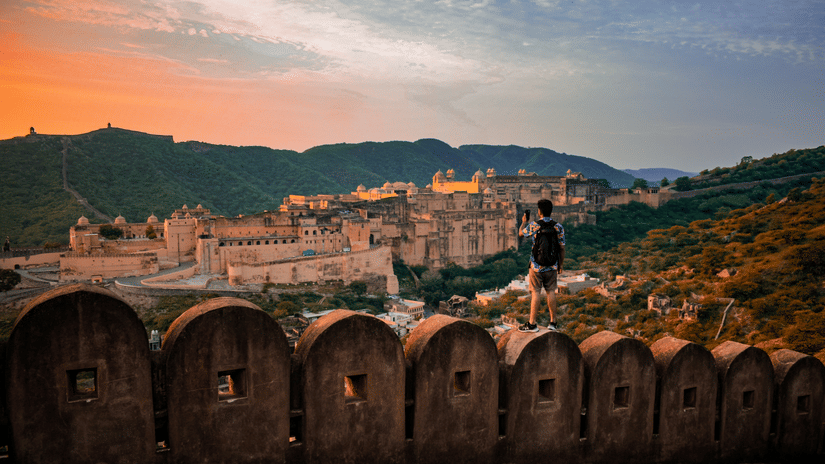
When the last daytime visitors leave the courtyards and the sun drops behind the Aravalli ridge, the fortress transforms into something altogether different for its evening spectacle. The Amer Fort Light and Sound Show masterfully narrates the dramatic 600-year history of the Kachhwaha dynasty, projected across the soaring sandstone walls as shifting light and shadow recreate the centuries.
The operating hours vary slightly across the year to match the sunset. During the peak winter tourist months, the English narration begins at 6:30 PM followed by the Hindi show at 7:30 PM, while summer slots push back by an hour.
The operating hours vary slightly across the year to match the sunset. During the peak winter tourist months, the English narration begins at 6:30 PM followed by the Hindi show at 7:30 PM, while summer slots push back by an hour.
The entire immersive experience runs for approximately 50 to 55 minutes. Tickets are precisely priced at INR 295 per person (inclusive of 18% GST), with free entry extended to children below seven years of age. The Amer Fort Light and Sound Show is best enjoyed from the open-air viewing gallery, where the illuminated fort creates a spectacular backdrop after sunset.
Arriving 15 to 20 minutes early is recommended, as it gives you the best chance of securing a clear, unobstructed view of the beautifully lit facades. For visitors who have spent the day exploring the fort's palaces, courtyards, and historic chambers, the evening show offers a completely different perspective.
Rajasthan’s intense summer heat regularly pushes past 40°C between April and June, and the fort’s exposed hilltop topography heavily magnifies that intensity. The subsequent monsoon months from July to September bring sporadic downpours that cool the air but can leave the cobbled pathways slick and disrupt the open-air light show schedule unpredictably.
In contrast, the months from October to March offer the most measured travel conditions. They boast pleasant daytime temperatures between 8°C and 25°C alongside clear, dry skies that keep the sandstone structures warm to the touch.
Within these peak months, arriving early between 8:00 AM and 9:00 AM allows you to experience the fort in its quietest, most serene state before the large tour buses arrive. Alternatively, heading up in the late afternoon around 3:30 PM provides beautiful, soft golden hour lighting across the central courtyards.
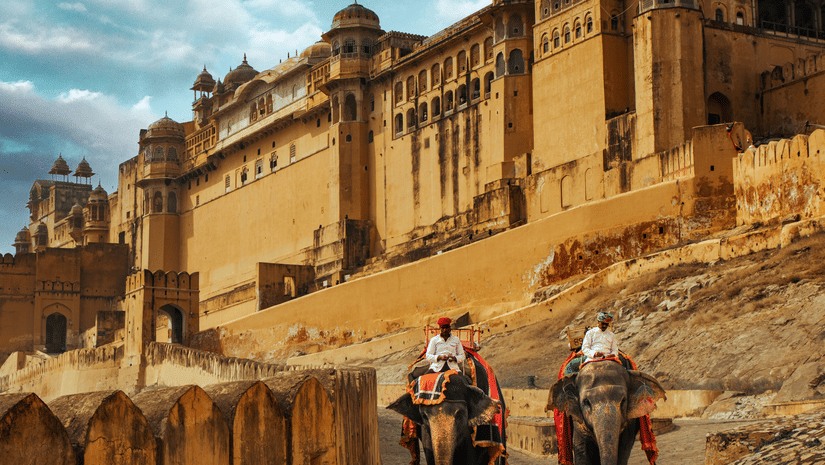
It also helps you to transition straight into the evening light and sound show without leaving the complex. While traditional morning elephant rides still operate under strict daily limits, hiring a local 4x4 jeep or walking up the ramp has become the modern, crowd-free standard for the ascent.

Arrive Early: Visit between 8:00 AM and 9:00 AM to enjoy cooler temperatures, smaller crowds, and the fort at its most peaceful.
Wear Comfortable Footwear: Amer Fort involves extensive walking across courtyards, staircases, and stone pathways.
Carry Water: The fort's hilltop location can feel warm, especially during the afternoon, making hydration essential.
Pack Sun Protection: Sunglasses, sunscreen, and a hat can make exploring the exposed sections of the fort far more comfortable.
Allow 3–4 Hours: The palace complex is larger than many visitors expect and deserves an unhurried visit.
- Stay for the Light and Sound Show: The evening spectacle offers a completely different perspective of the fort and its history.
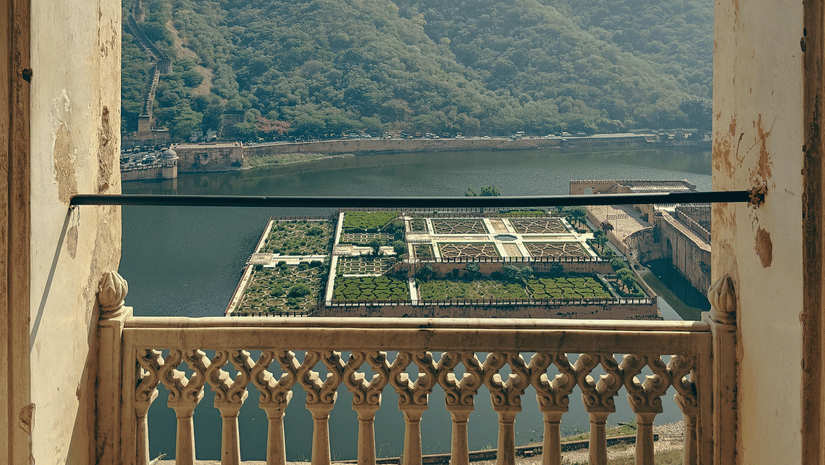
- Bring a Camera: From the Sheesh Mahal to the views over Maota Lake, the fort offers countless photography opportunities.
- Combine Nearby Attractions: Jaigarh Fort, Nahargarh Fort, and Jal Mahal can easily be included in the same itinerary.
- Choose a Nearby Hotel: Staying close to Amer Fort allows you to explore comfortably and enjoy the evening light show without a long journey back.
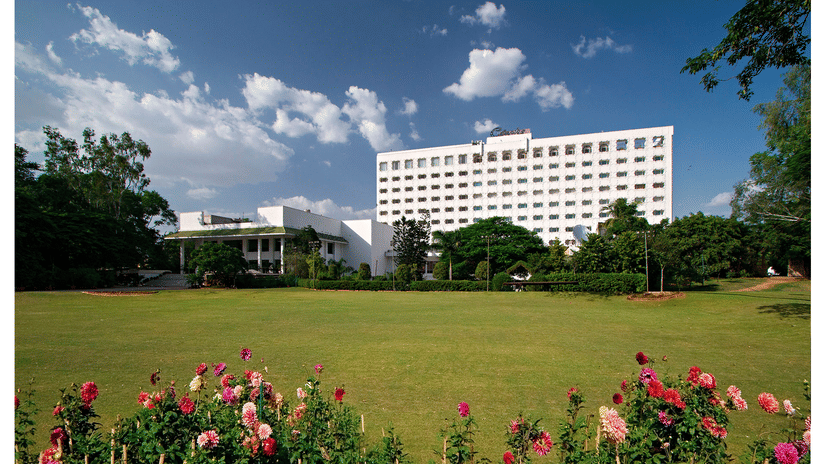
After a day spent exploring the grandeur of Amer Fort, from its regal courtyards and ornate palaces to the captivating evening light show, the experience deserves an equally refined conclusion. Located approximately 17 km from the fort on Jawahar Lal Nehru Marg, Clarks Amer, Jaipur, is easily reached in around 30 to 40 minutes by car, depending on traffic conditions.
The straightforward drive from Amer Fort through Jaipur brings guests to a sophisticated retreat where the energy of sightseeing gives way to comfort, indulgence, and relaxation. Many guests begin their evening beside our outdoor swimming pool, where landscaped gardens and tranquil surroundings provide a welcome contrast to the fort's dramatic hilltop setting. As twilight settles over the Pink City, ta BLU, our rooftop lounge, invites guests to unwind with handcrafted cocktails and sweeping views of Jaipur's illuminated skyline.
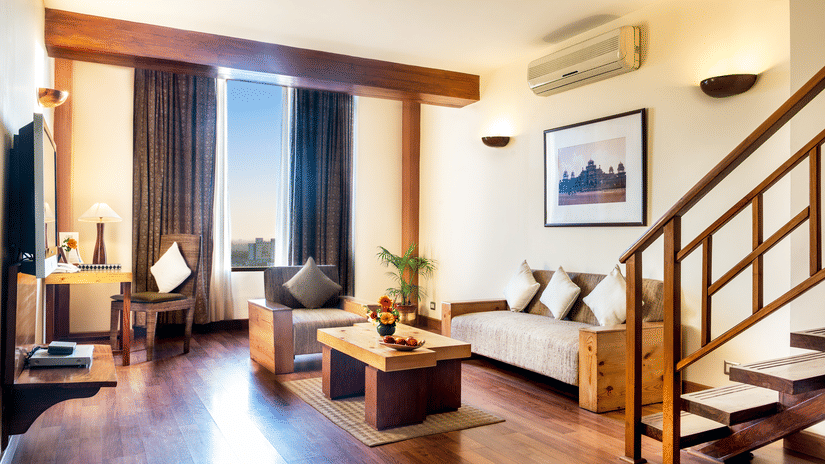
For a more leisurely affair, Goose presents an elegant dining experience, where thoughtfully curated menus are complemented by floor-to-ceiling views of the lush greenery surrounding the property. Our collection of seven accommodation categories, from Superior Rooms to the Presidential Suite, has been designed to offer comfort with a touch of understated luxury.
For those seeking complete rejuvenation after a day of exploration, Olive Spa offers a selection of restorative therapies crafted to ease tired muscles and restore balance. More than simply one of the closest 5-star hotels to Amer Fort, Clarks Amer provides a refined sanctuary where a day immersed in Rajasthan's royal history concludes in effortless comfort and sophistication.
For those seeking complete rejuvenation after a day of exploration, Olive Spa offers a selection of restorative therapies crafted to ease tired muscles and restore balance. More than simply one of the closest 5-star hotels to Amer Fort, Clarks Amer provides a refined sanctuary where a day immersed in Rajasthan's royal history concludes in effortless comfort and sophistication.
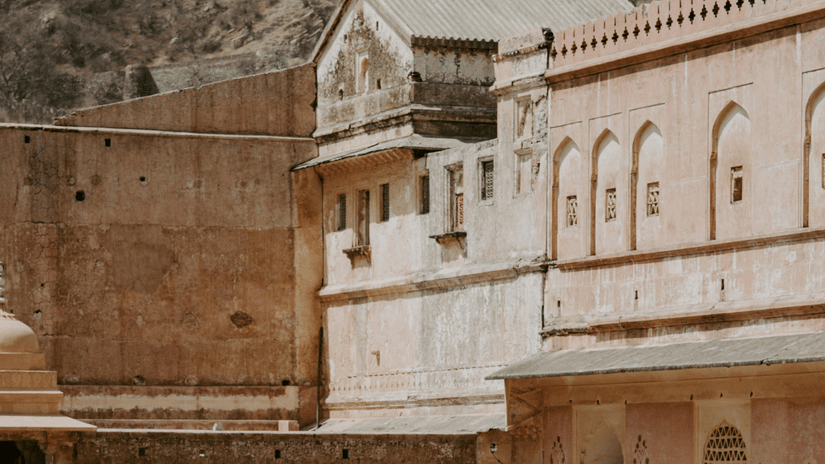
Amer Fort is far more than one of Jaipur's most recognisable landmarks. It is a living showcase of Rajput history, architectural brilliance, and royal ambition, where every courtyard, palace, and gateway tells a story that has endured for centuries. From the mirror-lit splendour of the Sheesh Mahal and the intricate beauty of Ganesh Pol to the captivating Amer Fort Light and Sound Show, the fort offers an experience that remains memorable long after the visit ends.
Whether you arrive to explore its remarkable history, admire its architectural details, or witness its illuminated walls after sunset, Amer Fort rewards visitors with a deeper understanding of Rajasthan's royal legacy. Its blend of cultural significance, striking design, and panoramic hilltop setting makes it an essential stop on any Jaipur itinerary.
Whether you arrive to explore its remarkable history, admire its architectural details, or witness its illuminated walls after sunset, Amer Fort rewards visitors with a deeper understanding of Rajasthan's royal legacy. Its blend of cultural significance, striking design, and panoramic hilltop setting makes it an essential stop on any Jaipur itinerary.